

Stacy Roden, LAC
Stacy Roden is a Christian marriage counselor in Tucson who helps couples feel close again. Many of the couples she sees care deeply about one another but feel caught in the same painful cycle. One partner reaches while the other withdraws. Conversations become conflict, or both leave feeling misunderstood and alone. Stacy also works with adults navigating anxiety, stress, perfectionism, grief, life transitions, and relationship patterns that keep them stuck.
Warm, relational, practical, and genuinely curious, Stacy helps clients slow things down, understand what is happening beneath the surface, and build new ways of responding to themselves and one another. Her humor brings lightness without avoiding depth. For clients seeking Christian counseling, she can naturally incorporate a biblical worldview, Scripture, prayer, and spiritual conversation while following each client’s needs and comfort.
Does this sound like you?
You do not need to relate to everything. One familiar experience may be enough to keep exploring.
You keep getting pulled into the same painful cycle
One of you reaches while the other withdraws, conversations quickly become conflict, or attempts to connect leave both of you feeling more hurt and misunderstood.
You love each other but feel lonely in the relationship
You may still care deeply about your marriage while feeling emotionally distant, unseen, or unsure how to rebuild the closeness and intimacy you both want.
Communication seems to create more disconnection
Attempts to explain your concerns or solve the problem repeatedly end in defensiveness, shutdown, or another unresolved argument.
You look capable but feel overwhelmed underneath
From the outside, you appear capable and continue handling what needs to be done. Internally, you may feel anxious, overloaded, disconnected, or pressured to hold everything together.
Old ways of coping are no longer helping
Overthinking, numbing, shutting down, people-pleasing, or trying harder may once have helped you feel safe, but now these patterns interfere with your confidence, boundaries, and relationships.
You want faith to have a natural place in therapy
You want room to explore your relationship with God and consider your struggles through a biblical lens, with Scripture, prayer, or spiritual conversation included according to your comfort.
What it feels like to work with Stacy
Warm enough to help you feel understood. Practical enough to help you grow.
Stacy creates a welcoming, attentive space where you can feel seen and understood—whether you come to therapy individually or with your partner. She listens with genuine curiosity and notices the emotional patterns, unspoken needs, and underlying experiences that can be difficult to recognize on your own.
Her style blends warmth, meaningful insight, practical tools, and humor. Stacy can bring lightness into the room without avoiding depth, helping you understand what is happening beneath the surface and practice new ways of responding to yourself and the people you love.
Read more about Stacy’s style

- A warm, genuine, relational presence
- Lightness and humor alongside depth
- Insight into patterns beneath the surface
- Practical tools for emotions and relationships
Specialized areas of focus
Where Stacy brings particular depth
Couples counseling + emotional connection When you love each other but feel trapped in conflict, distance, or the same repeating cycle. Explore this specialty Close specialty
Couples counseling for emotional connection
You may love each other deeply and still feel far apart. One partner may reach for connection while the other withdraws, conversations may quickly become defensive, or repeated attempts to solve the problem may leave both of you feeling more hurt, misunderstood, and alone.
Stacy helps couples slow the cycle down and understand what is happening underneath the conflict. Drawing from emotion-focused, attachment-based, and Gottman-informed approaches, she helps each partner recognize vulnerable emotions, communicate important needs more clearly, and create new ways of relating that support safety, repair, and deeper connection.
Anxiety, emotional overwhelm + perfectionism When you appear capable on the outside but feel anxious, pressured, or disconnected within. Explore this specialty Close specialty
Support for anxiety, overwhelm and perfectionism
You may be accustomed to functioning well, caring for other people, and doing what needs to be done while privately feeling tense, emotionally overloaded, or unable to quiet your mind. Trying harder, staying busy, or pushing emotions aside may help temporarily but can eventually leave you depleted and disconnected from what you need.
Stacy helps you recognize triggers, understand how emotions, thoughts, and nervous-system responses interact, and develop practical ways to regulate overwhelm. Her work may incorporate CBT, DBT, ACT, psychoeducation, and nervous-system regulation while also helping you build greater self-compassion, flexibility, resilience, and confidence.
Trauma, attachment wounds + old survival patterns When patterns that once helped you cope now interfere with your identity, boundaries, and relationships. Explore this specialty Close specialty
Trauma-informed counseling for attachment wounds
Painful experiences do not have to look extreme from the outside to continue shaping how you see yourself and relate to other people. You may find yourself shutting down, becoming defensive, overthinking, struggling to set boundaries, or reacting strongly when something in the present touches an earlier wound.
Stacy helps you understand these responses as patterns that once served a purpose rather than evidence that something is wrong with you. Her trauma-informed work may incorporate EMDR, Trauma Model Therapy, attachment-based therapy, and nervous-system regulation to help you process what happened, develop greater internal safety, and respond with more choice and self-trust.
A deeper look at the work
Explore more of Stacy’s specialties
The reason you come to therapy may involve more than one part of your life. Explore the areas below for a fuller sense of the concerns Stacy works with and the ways therapy may help.
Communication + healthy boundaries When trying to maintain connection means ignoring your needs or struggling to speak honestly.
Counseling for communication and healthy boundaries
You may avoid conflict, take responsibility for other people’s emotions, or agree to things that leave you feeling resentful and depleted. You may also struggle to communicate what you need without becoming defensive, shutting down, or fearing rejection.
Stacy helps you understand the beliefs, fears, and relationship experiences underneath these patterns. Together, you can learn to recognize your needs, communicate more clearly, and establish boundaries that protect connection without requiring you to lose yourself.
Therapy can help you move toward relationships shaped by greater honesty, mutual responsibility, confidence, and emotional safety.
Premarital counseling + relationship preparation When you want to build a strong foundation before beginning married life together.
Preparing for marriage together
Preparing for marriage involves more than planning a wedding. Differences in communication, family backgrounds, expectations, finances, faith, intimacy, and approaches to conflict can become more significant once you begin building a shared life.
Stacy helps couples understand the relationship patterns each person brings into the marriage and talk openly about areas that may otherwise remain unspoken. The goal is not to eliminate every difference, but to strengthen the way you listen, communicate, repair, and make decisions together.
Premarital counseling can help you enter marriage with greater awareness, realistic expectations, and practical tools for maintaining emotional connection.
Infidelity, betrayal + rebuilding trust When a breach of trust has changed how safe, connected, or hopeful your relationship feels.
Repair after infidelity or betrayal
Infidelity or another significant betrayal can leave one partner feeling devastated and unsafe while the other may feel ashamed, defensive, or uncertain how to repair what has happened. Conversations can quickly become consumed by questions, anger, withdrawal, or repeated attempts to find reassurance.
Stacy creates a structured space to slow these interactions down, understand the impact of the betrayal, and clarify what each partner needs in order to consider repair. She does not minimize the harm or force premature forgiveness.
When both partners are willing to engage honestly, therapy can support accountability, emotional understanding, clearer communication, and the gradual work of rebuilding trust.
Depression, disconnection + loneliness When you feel emotionally distant from yourself, other people, or the life happening around you.
Support for depression and loneliness
Depression does not always look like visible sadness. It may feel like numbness, exhaustion, irritability, isolation, or moving through daily responsibilities without feeling fully present in your own life.
Stacy offers a supportive place to explore what may be underneath the disconnection, including grief, unmet emotional needs, painful beliefs, relationship wounds, or patterns of withdrawing when life feels overwhelming.
Therapy can help you reconnect with your emotional experience, respond to yourself with greater compassion, and gradually move toward renewed confidence, connection, and hope.
Grief, loss + life transitions When loss or change has disrupted your sense of stability, identity, or direction.
Counseling through grief and life transitions
Grief may follow the death of someone you love, but it can also emerge through relationship changes, an empty nest, shifting family roles, career transitions, or the loss of a future you expected to have.
Stacy provides room to name what has changed and make sense of the emotions connected to it. She helps you understand how the loss may be affecting your relationships, beliefs, identity, and ability to feel grounded in the present.
Therapy can help you honor what mattered while developing the resilience, clarity, and practical support needed to move through an unfamiliar season.
Ministry stress, church hurt + spiritual questions When faith, leadership, service, relationships, and emotional well-being become difficult to separate.
Therapy for ministry stress and church hurt
Ministry professionals and their families may carry pressure to remain available, spiritually strong, and emotionally composed even when they feel exhausted, isolated, conflicted, or hurt. Painful church experiences can also affect your sense of belonging, trust, identity, and relationship with God.
Stacy understands that spiritual struggles often involve relationship dynamics, power differences, and emotional wounds as well as questions of belief. She offers room to examine these experiences honestly without requiring you to protect a person, institution, or version of faith that has caused harm.
When you want faith included, therapy can incorporate Scripture, biblical narrative, prayer, and spiritual reflection while respecting your questions, boundaries, and pace.

Christian counseling with Stacy
Working with a Christian marriage counselor in Tucson
If you are looking for a Christian marriage counselor in Tucson, Stacy offers thoughtful integration of relationship therapy and Christian faith. She works with individuals and couples from a biblical worldview and can incorporate Scripture, biblical narrative, prayer, reflection, and spiritual conversation when these would be meaningful to you. She will not assume how much faith integration you want. You can ask for it to be central, included when relevant, or left out of a particular session.
How Stacy can incorporate faith when requested
Professional details
A closer look at Stacy’s practice
Review Stacy’s education, therapeutic approaches, client fit, and practical session information.
Credentials + education Arizona Licensed Associate Counselor • EMDR trained
Stacy’s counseling credentials and education
LAC-20524
Phoenix Seminary, 2021
2023
Rachel Neville, LPC-20943
Stacy is an Arizona Licensed Associate Counselor who provides individual and couples counseling for adults while completing the supervised clinical experience required for independent licensure.
Therapeutic approaches Relational, practical, emotion-focused, and attachment-informed
Therapeutic approaches used by Stacy
Stacy draws from emotion-focused, attachment-based, cognitive, trauma-informed, and skills-based approaches. She adapts the work to each client or couple’s concerns, goals, readiness, and preferences rather than expecting everyone to follow the same therapeutic process.
Who Stacy works with Couples • Individual adults 18+ • Parents
Clients who may be a good fit
Common areas of work
- Couples conflict and emotional disconnection
- Communication difficulties and recurring relationship cycles
- Anxiety, stress, perfectionism, and emotional overwhelm
- Trauma, PTSD, and attachment wounds
- Boundaries, codependency, rejection, and betrayal
- Grief, loss, and unwanted life transitions
- Infidelity and premarital counseling
- Ministry-related stress, church hurt, and spiritual questions
Therapy may fit particularly well if
- You want practical skills as well as deeper understanding.
- You feel capable on the outside but struggle internally.
- You feel stuck in familiar emotional or relationship patterns.
- You want help understanding your triggers and nervous system.
- You appreciate warmth, curiosity, honesty, and humor.
- You want support paired with gentle challenge.
- You are motivated to practice new ways of responding.
- You may—or may not—want Christian faith included in therapy.
Stacy works with adults and couples. She does not provide teen therapy or treatment for active addiction, eating disorders, dissociative disorders, complex trauma, active suicidality, custody-related concerns, or couples experiencing active domestic violence. Clients needing immediate stabilization may require a higher level of support.
Office + session details La Cholla office + telehealth • Wednesdays + Thursdays • $100 per session
Office, schedule, fee and telehealth details
Tucson, AZ 85741
View map
Telehealth only
Thursdays • 9:00 AM–5:00 PM
In person
View availability
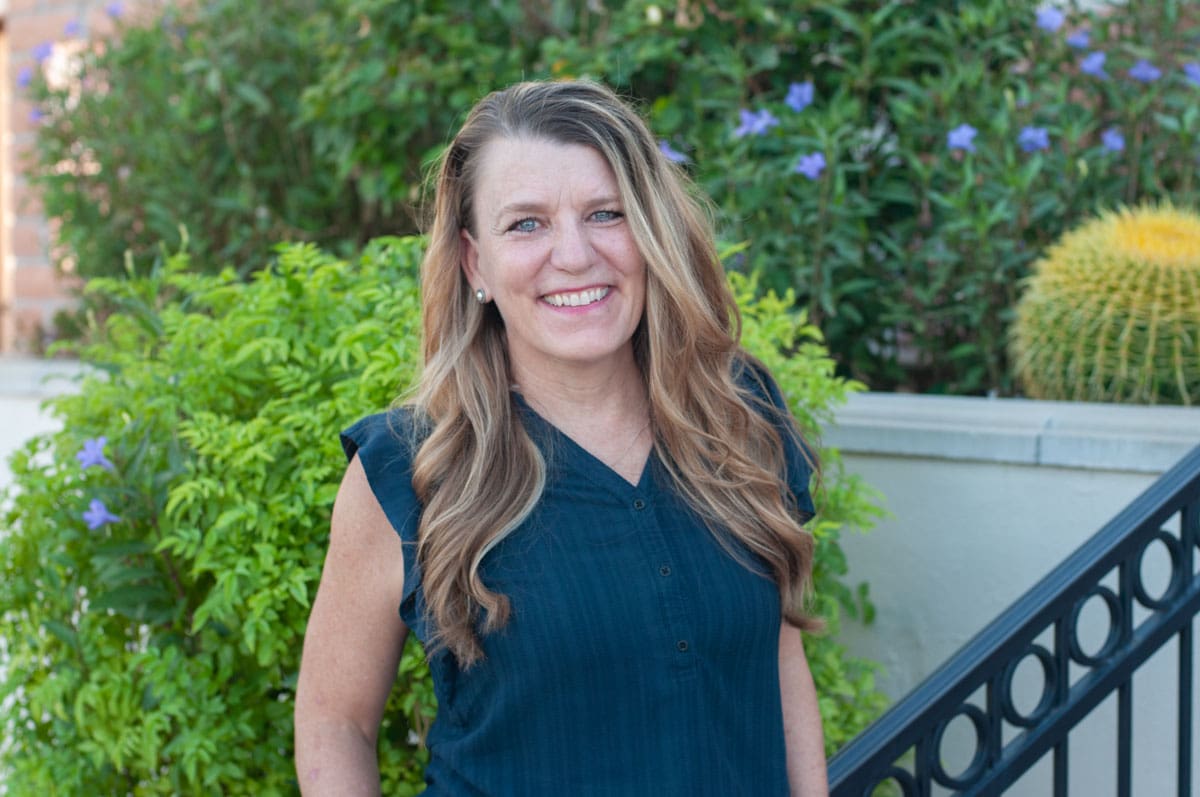
Stacy, in a few words
A little more about Stacy
Relationships are central to Stacy’s life as well as her work. She has been married for more than 30 years and is the mother of four adult children and grandmother of six. She also has an adult son with special needs. These experiences have given her a deep respect for the complexity of family life, long-term relationships, caregiving, change, and the many forms love can take.
Stacy has also been involved in church ministry for more than 30 years. She understands both the meaningful place faith and Christian community can hold in a person’s life and the strain, disappointment, or difficult questions that can arise within ministry and church relationships.
Outside of counseling, Stacy enjoys spending time with family and friends, hiking or taking long walks, and participating in fitness classes. She naturally brings curiosity, warmth, and humor into her relationships. She enjoys getting beneath the surface to understand what has shaped a person while still making room for lightness, connection, and the ordinary parts of being human.
How therapy may unfold
A collaborative process for understanding what keeps you stuck and creating new ways of responding
Build safety and understanding
Begin with a warm, collaborative relationship where you feel seen, understood, and able to talk honestly about what is happening and what you hope will change.
Recognize the pattern
Notice how triggers, emotions, beliefs, nervous-system responses, past experiences, and recurring relationship cycles interact and keep familiar struggles going.
Practice something different
Develop practical ways to regulate emotions, communicate needs, strengthen boundaries, repair disconnection, and respond with greater clarity, agency, and connection.
Stacy meets you where you are while believing in your capacity to grow.
A different way forward
You are not stuck with the patterns that brought you here.
You do not need to know exactly how to fix the relationship or have the right words for what is happening inside you before scheduling. If you are looking for a Christian marriage counselor in Tucson and Stacy feels like a possible fit, you can begin with what is happening now. Together, you can slow the cycle down, understand what is underneath, and build new ways of relating—to yourself, to each other, and, when desired, to God. If you are still deciding, take the time you need to compare counselors.